2026-01-09
If you live in an HDB flat in Singapore, you're familiar with the reality of cooking in a compact kitchen. With limited counter space, tight storage, and often just one or two cutting boards competing for room with your rice cooker and air fryer, preparing meals can feel like a juggling act. Add sharp knives to the equation, and the challenges multiply—space constraints can compromise both safety and efficiency if you're not strategic about your setup.
But here's the good news: a small kitchen doesn't mean you have to sacrifice performance or safety. With the right approach to knife selection, storage, and technique, you can work efficiently and safely in even the most compact HDB kitchen. In fact, many professional chefs work in tight spaces and have developed strategies that translate perfectly to Singapore's home kitchens.
This guide will show you how to maximize your knife skills, maintain safety, and improve cooking efficiency in your HDB kitchen—no renovation required.
The typical HDB kitchen measures between 6 to 10 square meters, with limited counter space often dominated by essential appliances. Unlike spacious kitchens with expansive islands and dedicated prep zones, HDB kitchens demand intentional organization and strategic tool selection.
When it comes to knives, this spatial limitation creates unique challenges. You can't spread out multiple cutting boards, leave knives lying around on the counter, or have expansive knife blocks taking up precious workspace. Every tool must earn its place, and safety becomes even more critical when working in close quarters.
In a small kitchen, accidental contact with knife blades becomes more likely when reaching for ingredients or moving around the limited space. Clutter amplifies risk—when counters are crowded, it's easier to knock a knife off the surface or reach blindly into a crowded drawer. Understanding these specific challenges is the first step toward creating a safer, more efficient cooking environment.
One of the biggest mistakes home cooks make in small kitchens is owning too many knives. While a full knife set might seem appealing, in an HDB kitchen, it's an inefficient use of storage space and can actually slow you down during meal prep.
The Essential Two-Knife System
For most Singaporean home cooks working in compact spaces, two quality knives handle 95% of kitchen tasks:
A versatile 20-22cm chef's knife serves as your primary tool for chopping vegetables, slicing proteins, and mincing garlic and ginger—the backbone of Asian cooking. This size offers an ideal balance between capability and maneuverability in tight spaces. Larger knives (25cm+) can feel unwieldy in small kitchens, while smaller ones limit efficiency.
Pair this with a 9-10cm paring knife for detail work like peeling, deveining prawns, or removing seeds from chilies. This compact knife excels at tasks requiring precision and control.
These two knives cover everything from preparing chicken rice to chopping vegetables for stir-fries. By limiting your collection, you simplify storage, maintenance, and decision-making during meal prep.
When to Add a Third Knife
If you frequently bake bread, prepare sandwiches, or slice tomatoes, a serrated bread knife (20-25cm) makes a valuable addition. However, only add this if you genuinely use it weekly—every additional knife requires storage space and maintenance.
Quality Over Quantity
In small kitchens, space is premium. Rather than owning eight mediocre knives crammed into a bulky block, invest in two or three high-quality, properly sharpened knives that perform flawlessly. Sharp, well-maintained knives work faster and safer than an entire drawer of dull blades.
Storage represents one of the biggest safety concerns in small kitchens. When space is limited, improper knife storage becomes not just inconvenient but genuinely dangerous.
Wall-Mounted Magnetic Strips: The HDB Kitchen Champion
For compact HDB kitchens, wall-mounted magnetic knife strips offer the single best storage solution. They utilize vertical space that would otherwise go unused, keep knives visible and accessible, allow knives to dry completely (essential in Singapore's humid climate), and eliminate the risk of reaching into a drawer and cutting yourself on a hidden blade.
Install the magnetic strip on an empty wall section near your primary prep area—often above the counter or on the side of a cabinet. Ensure it's mounted securely into studs or with appropriate wall anchors, as HDB walls vary in construction.
One crucial safety tip: mount the strip at a height where knives are clearly visible but not at eye level. You want to see them easily without risk of bumping into them when standing up quickly. Ideal height is typically between shoulder and chest level for the primary cook.
Drawer Storage That Actually Works
If wall mounting isn't possible (perhaps you're renting or have limited wall space), drawer storage can work—but only with proper organization.
Invest in a drawer organizer with individual knife slots or use knife blade guards for each knife. This prevents blades from rattling around loose, which dulls edges and creates a safety hazard when reaching into the drawer.
Designate a specific drawer for knives exclusively—never mix knives with other utensils. When you open a knife drawer, you should know exactly what to expect and where each knife sits. This predictability is essential for safety in small spaces where you're often working quickly.
Keep this drawer near your primary cutting area to minimize movement around the kitchen while holding sharp objects.
What to Avoid in Small Kitchens
Bulky knife blocks consume too much valuable counter space in HDB kitchens. That premium real estate is better used for actual food prep rather than storage.
Similarly, avoid storing knives loose in drawers without protection, leaving knives on counters between tasks (too easy to knock off or forget about), or storing knives in cabinets with other items where they can get buried or damaged.
In spacious kitchens, you can leave a cutting board out permanently. In an HDB kitchen, every square centimeter of counter space needs to be optimized for actual cooking tasks.
The One-Board Strategy
Rather than owning multiple cutting boards that clutter your limited storage, invest in one or two high-quality boards sized appropriately for your counter space. For most HDB kitchens, a 30cm x 40cm board offers optimal size—large enough for efficient prep but compact enough to store easily.
Choose a board with practical storage in mind. Thinner boards (1.5-2cm) are easier to store in cabinet racks or lean against walls compared to thick, heavy boards. However, ensure it's still sturdy enough not to warp.
Bamboo cutting boards are particularly popular in Singapore. They're naturally antimicrobial, resist moisture better than many woods, are lightweight for easy handling in tight spaces, and are more affordable than premium hardwoods.
Creating a Stable Work Surface
In small kitchens, cutting boards often sit partially over the sink or hang off the counter edge due to space constraints. This instability is dangerous when working with sharp knives.
Always place a damp kitchen towel or non-slip mat under your cutting board before starting any knife work. This simple step prevents the board from sliding and dramatically improves safety and efficiency. A stable cutting surface allows you to work confidently and quickly without constantly adjusting your board.
If your counter space is extremely limited, consider using a large cutting board that sits across your sink, effectively extending your workspace. Specialty over-sink cutting boards are available, or you can simply ensure your regular board is long enough to span your sink securely.
The Clear-as-You-Go Method
Professional chefs in tight kitchens master the art of clearing as they work—and this discipline is essential in HDB kitchens.
Keep a small bowl or container near your cutting board for scraps. As you work, immediately sweep trimmings into this container rather than letting them accumulate on your limited counter space. This habit keeps your work area clear, reduces clutter, and minimizes the risk of knocking your knife off the counter.
When you finish with one ingredient, immediately transfer the prepared pieces to their cooking vessel or storage container before moving to the next ingredient. This continuous flow prevents counter clutter and maintains maximum workspace.
Standard knife safety advice applies everywhere, but small kitchens demand additional awareness and modified techniques.
The Fixed Pivot Point Principle
In compact kitchens, you can't afford to wave knives around while moving between work areas. Adopt the "fixed pivot point" principle: your cutting board becomes your sole knife work zone.
Keep your knife tip on or near the cutting board at all times during prep. When you need to move around the kitchen—reaching for ingredients, moving to the stove, or disposing of scraps—put the knife down first. Never carry a knife while reaching for something in a cabinet or walking across the kitchen, even if it's just a few steps.
This discipline eliminates the risk of accidentally bumping into family members, hitting appliances, or losing control of the knife in cramped quarters.
The Safe Hand-Off Method
In busy HDB households, multiple people often need to navigate the kitchen simultaneously. When someone needs to pass behind you while you're working with a knife, use this protocol:
Stop cutting immediately and rest the knife flat on the cutting board with the blade facing away from you. Keep one hand on the knife handle so it can't roll or be knocked off. Announce clearly, "Knife down" or "Clear," so the person passing knows it's safe.
Never turn while holding a knife to speak to someone or pass an ingredient. Always put it down first, then turn.
Maintaining Awareness in Tight Quarters
Small kitchens mean close proximity to family members, especially during busy meal prep times. Develop verbal communication habits:
Announce when you're starting knife work: "I'm going to start chopping now." Alert others when you're moving with a knife in hand (though this should be rare): "Knife moving." Clearly signal when you're finished: "Knife away" or "All clear."
These simple verbal cues dramatically reduce the risk of accidental contact in confined spaces where people move around each other constantly.
Safety and efficiency aren't opposing forces—in fact, they work together. Safe knife practices actually improve efficiency by reducing hesitation and building confidence.
The Mise en Place Mindset for Small Spaces
French for "everything in its place," mise en place is how professional chefs prep efficiently—and it's especially valuable in small kitchens.
Before you start cooking, gather all ingredients and tools you'll need. Do all your knife work in one session rather than chopping one ingredient, cooking it, then chopping another. This batched approach minimizes how often you're using knives and reduces the time your limited counter space is occupied by cutting tasks.
Use small bowls or containers to hold prepped ingredients. Once all cutting is complete, clean your board and knife, clearing the space for cooking. This workflow separation keeps your kitchen organized and reduces the knife safety risks that occur when you're juggling multiple tasks simultaneously.
Proper Knife Skills Reduce Time and Improve Safety
Ironically, many home cooks in small kitchens avoid learning proper knife techniques because they feel they don't have space to practice. But proper technique actually requires less space and is safer in confined areas.
The pinch grip—holding the knife by pinching the blade between your thumb and forefinger rather than gripping only the handle—provides superior control with less arm movement. This is ideal for tight spaces.
The claw grip for your guiding hand—fingers curled under, knuckles forward—protects your fingertips while allowing efficient, rhythmic cutting without excessive movement.
These fundamental techniques make you faster and safer, especially valuable when working in a compact HDB kitchen.
Sharp Knives Are Non-Negotiable
This cannot be overstated: in a small kitchen where space constraints already challenge safety, a dull knife multiplies the danger exponentially.
Dull knives require more force, which means less control in tight spaces. They're more likely to slip off ingredients, potentially causing injury. They make cutting frustrating and slow, encouraging rushed, unsafe shortcuts.
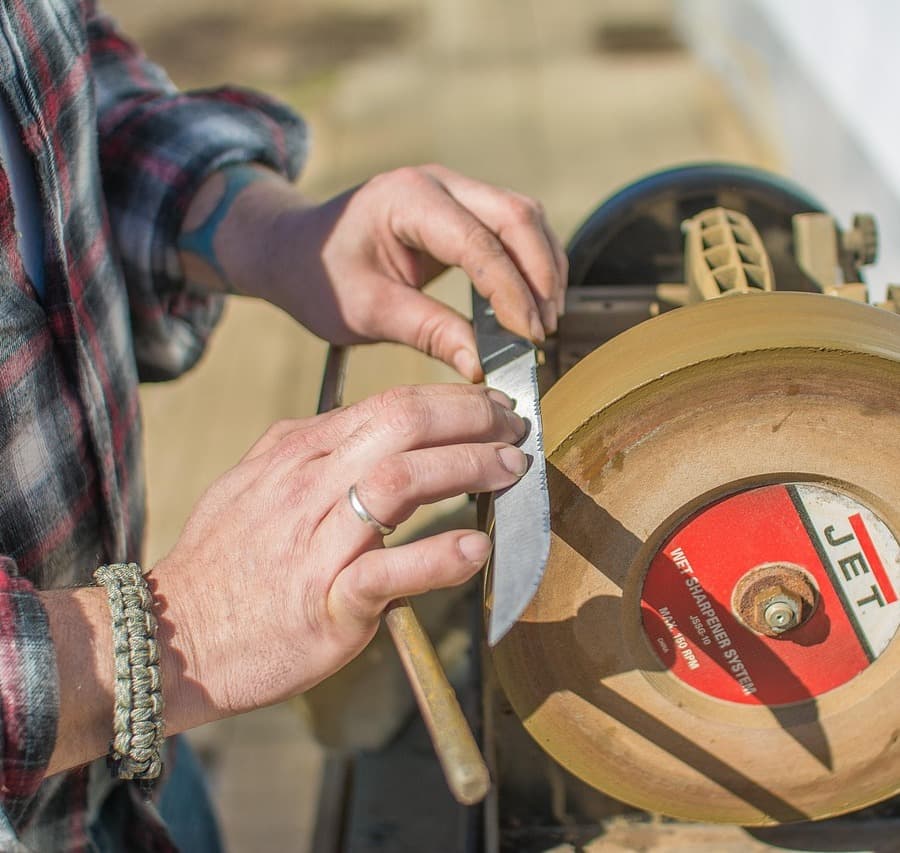
In Singapore's humid climate, maintain a regular sharpening schedule. For home cooks preparing meals several times weekly, professional sharpening every 2-3 months ensures your knives perform optimally. Between sharpening sessions, use a honing steel to maintain the edge.
When your knife glides through ingredients effortlessly, you can work quickly with confidence—the hallmark of safe, efficient cooking in any space.
HDB living often means children playing nearby while meals are prepared, or multiple family members moving through the kitchen simultaneously. These dynamics require additional safety considerations.
Creating Clear Boundaries
In open-concept HDB layouts where kitchens flow into living areas, establish clear boundaries for when knife work is happening. If possible, create a visual cue—some families use a specific cutting board color or place a distinctive towel on the counter to signal active knife work.
Teach children early that when the cutting board is out, the kitchen work area is off-limits. This doesn't mean they can't be nearby, but they should understand not to reach across the counter or run near the prep area.
Teaching Knife Safety to Children
If you have older children who help with meal prep, teaching proper knife skills in a small kitchen is especially important. Start with child-safe training knives or butter knives for young children learning cutting motions. Graduate to paring knives for pre-teens before introducing chef's knives.
When teaching in a small kitchen, emphasize the fixed position principle even more strongly—the knife stays on the cutting board, and they don't turn around or move until the knife is down.
Consider designating a specific spot as the "learning station" where children always do their knife work, building consistency and safety through routine.
Storage That Keeps Knives Away from Children
If you have young children, magnetic strips should be mounted high enough that they're completely out of reach. Alternatively, use drawer storage with a child safety lock if your HDB kitchen has appropriate drawers.
Never leave knives in dish drainers or lying on counters between uses, even momentarily. In small spaces where children can quickly access counters, knives must be immediately returned to secure storage after use.
Beyond knife-specific storage, overall kitchen organization impacts how safely and efficiently you can work with knives in limited space.
The Work Triangle in HDB Kitchens
Professional kitchens optimize the work triangle—the path between refrigerator, sink, and stove. In HDB kitchens, this triangle is often compressed into a few steps, which can be both an advantage and a challenge.
Position your knife storage and primary cutting area to minimize movement while holding knives. Ideally, this means:
Your cutting board sits near the sink for easy rinsing of produce and quick cleanup. Your knife storage is directly above or beside this prep area. The prep area has easy access to the refrigerator for grabbing ingredients and to the stove for transferring prepped ingredients.
When you minimize the distance you need to move with or around knives, you reduce risk and improve efficiency.
Clearing Counters Before Cooking
Cluttered counters in small kitchens create cascading problems—you have nowhere to put ingredients, cutting boards jostle other items, and knives can get buried under other objects.
Develop a pre-cooking routine of clearing and wiping counters completely. Put away appliances you're not using. Move items into cabinets temporarily. Create as much clear space as possible before pulling out your knife and cutting board.
This simple habit transforms cooking in small spaces. Instead of navigating around obstacles while handling sharp objects, you have a clear, dedicated workspace.
Vertical Storage Maximization
Small kitchens require thinking vertically. Beyond magnetic knife strips, consider:
Wall-mounted magnetic spice racks that keep frequently used seasonings accessible without consuming counter space. Hanging organizers for utensils on the inside of cabinet doors. Stacked shelf risers inside cabinets to maximize vertical storage capacity. Over-the-door organizers for pantry items.
Every item you store vertically frees up horizontal counter and drawer space, ultimately creating more room for safe knife work.
Singapore's humidity creates unique challenges for knife maintenance, especially relevant when storing knives in the warm, humid environment of an HDB kitchen.
Quick-Dry Protocol
Never leave knives wet in an HDB kitchen. After washing, immediately and thoroughly dry each knife with a clean towel, paying special attention to the area where the blade meets the handle where moisture can collect.
This is especially critical if you're using drawer storage. Putting even slightly damp knives into enclosed drawers in Singapore's humidity is a recipe for rust spots within days.
If using a magnetic strip, ensure knives are completely dry before mounting. While the open-air exposure helps with ongoing drying, initial moisture can still cause problems.
Regular Inspection in Humid Conditions
Check your knives weekly for any signs of rust, especially if you own carbon steel blades or older stainless steel knives. Catching rust early means you can remove it with a baking soda paste and prevent permanent damage.
Singapore's climate means rust can develop faster than in drier environments, making preventive inspection essential for maintaining your knives long-term.
Strategic Sharpening Schedules
Sharp knives are essential for small-space safety and efficiency. Don't wait until your knives are noticeably dull before sharpening.
For regular home cooks, schedule professional sharpening every 2-3 months. Mark it on your calendar rather than trying to remember—treat it like a routine maintenance appointment.
Between professional sharpenings, use a honing steel before major meal prep sessions to maintain the edge. This quick maintenance takes less than a minute but significantly extends sharpness between professional services.
Singaporean households are often time-pressed, with both parents working and meal prep squeezed into limited evening hours. Efficient knife skills directly translate to more time with family and less stress.
Batch Prepping for the Week
Rather than chopping vegetables fresh for every meal, consider a weekly prep session. Spend 30-60 minutes on Sunday (or your preferred day) chopping commonly used ingredients:
Dice onions, garlic, and ginger for quick starts to Asian dishes. Julienne carrots and slice cabbage for easy stir-fries. Prep vegetables for soups or curries. Portion and slice proteins for the week's meals.
Store prepped ingredients in airtight containers in the refrigerator. This approach means you're only using knives during one dedicated session rather than navigating knife safety during hectic weeknight cooking.
The Assembly Line Method
When prepping multiple ingredients, group similar cutting tasks together. Dice all items that need dicing before moving to slicing tasks. This minimizes the mental switching costs and keeps you in an efficient rhythm.
For example, if making a stir-fry with chicken, bell peppers, onions, and carrot, dice the chicken first, then all vegetables, rather than fully prepping one ingredient before moving to the next. This assembly-line approach is faster and maintains better knife performance throughout the session.
Strategic Shortcuts That Still Deliver Quality
In small kitchens with limited time, strategic shortcuts don't mean sacrificing quality:
Keep a well-sharpened paring knife accessible for quick tasks like opening packages or trimming produce—don't always reach for the chef's knife. Learn the correct ways to shortcut prep for specific ingredients (like smashing and peeling garlic instead of dicing it when it's going into a sauce). Use kitchen shears for herbs when appropriate—they're faster than knife work for basil or cilantro going into a garnish.
These small efficiency gains add up across multiple meals per week, saving significant time without compromising safety or results.
While two quality knives handle most tasks, certain cooking patterns might justify selective additions—but only if storage permits and you'll genuinely use them regularly.
The Chinese Cleaver: Surprisingly Ideal for Small Spaces
Chinese cleavers (chef's knives, not the heavy meat cleavers) are increasingly popular in Singapore for good reason. The broad, rectangular blade excels at typical Asian cooking tasks—julienning vegetables, smashing garlic, transferring chopped ingredients from board to wok.
The wide blade actually works well in small spaces because it provides excellent control and can serve multiple functions, potentially replacing both a chef's knife and a bench scraper. If your cooking is primarily Asian-style, a Chinese cleaver might be more versatile than a Western chef's knife.
Specialized Knives Worth Considering
If you frequently prepare specific dishes, these specialized knives might earn their space:
A fish filleting knife if you regularly buy whole fish at wet markets and break them down at home. A deba knife if you often prepare Japanese dishes and need to break down fish with precision. A vegetable cleaver if you prepare large quantities of vegetables and want dedicated tools for plant-based prep.
However, only add specialized knives if you use them at least weekly. In small kitchens, every tool must genuinely earn its space.
Quality Upgrades Make Sense
Rather than adding more knives, consider upgrading the quality of your existing essential knives. Moving from a mediocre chef's knife to a high-quality one delivers more practical benefit than owning five average knives.
Better quality knives hold their edge longer, require less maintenance, offer superior balance and control in tight spaces, and often last decades when properly cared for.
For small kitchens, this quality-over-quantity approach optimizes both performance and space utilization.
After years of sharpening knives for Singaporean home cooks, certain mistakes appear repeatedly—especially in compact HDB kitchens.
Mistake 1: Cutting Boards That Don't Fit the Space
Oversized cutting boards hang off counters, creating instability and danger. Undersized boards force you to cut on the counter itself (damaging both counter and knife) or work inefficiently.
Measure your usable counter space and choose a board that fits comfortably with a few centimeters of clearance on all sides. The board should sit flat without overhanging edges.
Mistake 2: Using Blunt Knives Because "Sharpening Is Inconvenient"
Many home cooks tolerate dull knives because organizing professional sharpening feels complicated. But mobile sharpening services in Singapore have made this incredibly convenient—schedule a pickup online, and your knives return sharpened within days.
The safety and efficiency gains of sharp knives far outweigh the minimal effort of scheduling sharpening. Don't let inertia compromise your cooking experience.
Mistake 3: Multitasking While Using Knives
In busy households, it's tempting to chop vegetables while chatting with family or watching children. But divided attention while handling sharp objects in confined spaces dramatically increases injury risk.
When you're using knives, make that your sole focus. If you need to attend to something else, put the knife down first, handle the interruption, then return to knife work with full attention.
Mistake 4: Storing Knives Tip-Down in Crowded Drawers
Some people store knives blade-up, thinking this protects the edge. But in crowded drawers, this creates a significant safety hazard—reaching in for another utensil can result in serious cuts.
Always store knives blade-down in sheaths or organizers, or use magnetic strips where blade orientation doesn't matter because knives are completely visible and accessible.
Living in an HDB flat doesn't mean compromising on cooking quality or settling for unsafe knife practices. With strategic knife selection, smart storage solutions, and intentional techniques adapted for confined spaces, you can work as efficiently and safely as any professional chef.
The key principles are simple: quality over quantity in knife selection, vertical storage to maximize limited space, establishing clear routines and boundaries for safe knife work, maintaining sharp blades appropriate for Singapore's humid climate, and continuous organization to keep limited counter space clear for actual cooking.
Small kitchens actually offer some advantages—everything is within reach, workflow becomes naturally efficient, and you're forced to maintain organization rather than letting clutter accumulate.
By applying the strategies in this guide, your HDB kitchen can become a highly functional, safe cooking space where knife work is confident, efficient, and enjoyable. The size of your kitchen doesn't determine the quality of your cooking—your tools, techniques, and organization do.
Remember: sharp knives, smart storage, and safe habits transform even the smallest kitchen into a culinary workspace you'll love using every day.
Still curious? Check out our Ultimate Guide to Knife Sharpening.
At Knife Sharpening SG, we understand the unique needs of Singapore's home cooks, especially those working in compact HDB kitchens. Our professional sharpening service ensures your knives perform optimally, making your limited space work harder for you.
We offer convenient mobile pickup and delivery across Singapore—no need to leave home. Whether you need routine sharpening for your essential kitchen knives or repairs for damaged blades, our experienced team provides fast turnaround times so you're never without your tools for long.
Sharp knives are essential for safe, efficient cooking in small spaces. Don't let dull blades slow you down or compromise safety. Book a pickup today and experience the difference professionally sharpened knives make in your HDB kitchen.
We are currently only operating in Singapore. Our next pick up will be on 2026-10-10.