2026-05-01
Carbon steel knives have a devoted following for good reason. They can take an extremely keen edge, they are satisfying to sharpen, and many cooks love the way they feel on the board. But in Singapore, they ask for more discipline than stainless knives.
The issue is humidity. Carbon steel reacts quickly with moisture and acidic food. That reaction can form either a protective patina or destructive rust. Knowing the difference is the key to owning carbon steel confidently.
Stainless steel contains chromium, which helps resist corrosion. Carbon steel has less corrosion resistance, so it reacts more readily with water, salt, acids, and humid air.
That reactivity is not always bad. Over time, carbon steel develops a patina: a grey, blue, brown, or darkened surface layer caused by controlled oxidation. A stable patina can reduce further reactivity and give the knife character.
Rust is different. Rust is active corrosion, usually orange or reddish-brown. It can pit the blade, roughen the surface, weaken the edge, and transfer unpleasant flavours to food.
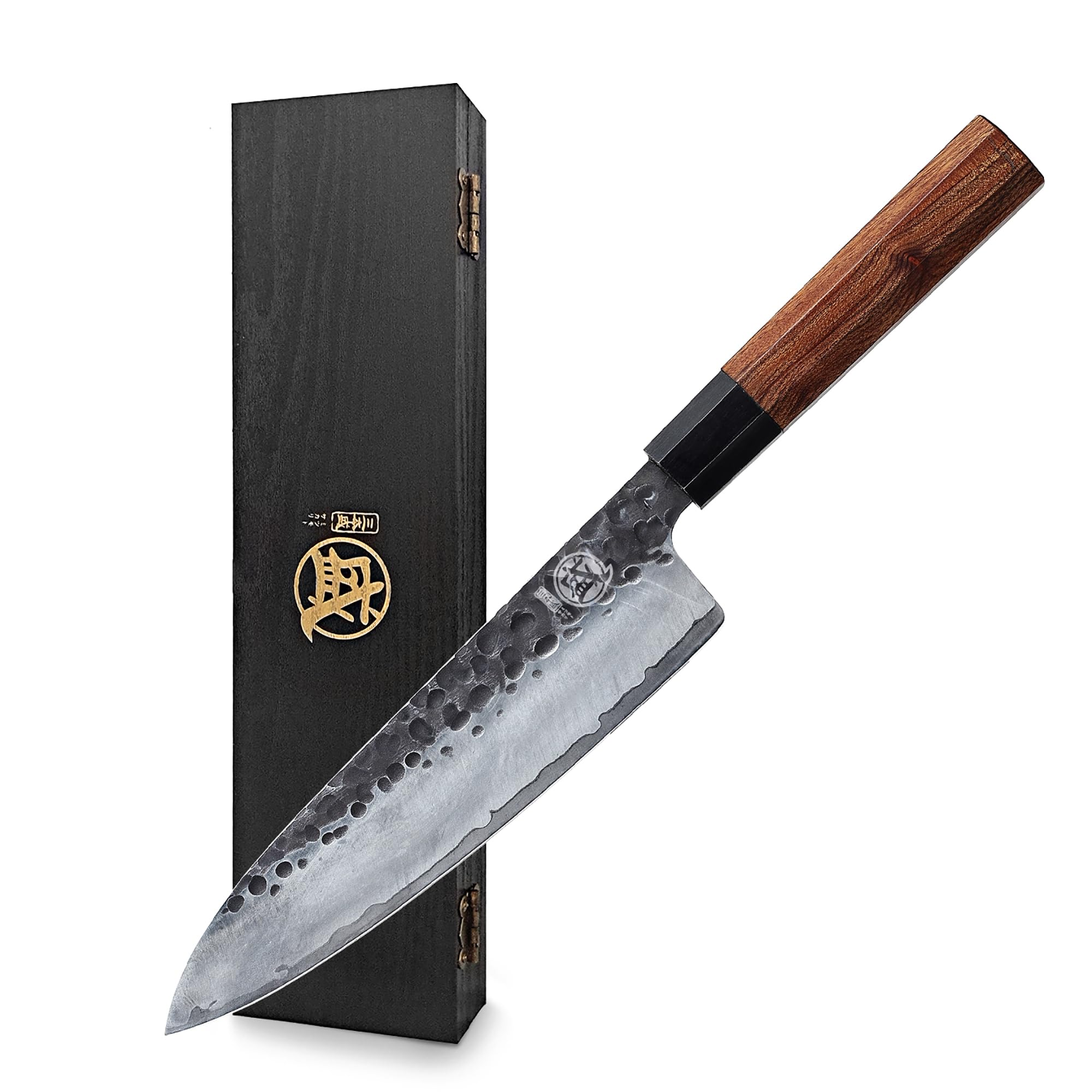 Carbon steel rewards attentive care, especially in humid kitchens.
A patina is usually smooth, darker, and integrated into the steel. It often appears after cutting onions, meat, citrus, tomatoes, or other reactive ingredients.
Rust is rougher, brighter, and more urgent. If you can feel it with a fingernail or see orange spots spreading, treat it promptly.
The routine is simple, but it must be consistent.
Do not air-dry carbon steel in Singapore. The air itself carries enough moisture to cause trouble, especially in enclosed kitchens.
Tomatoes, citrus, pineapple, vinegar, and some pickles can accelerate patina formation. That is normal, but do not leave residue on the blade.
After cutting acidic food, wipe the knife quickly. If you are done cooking, wash and dry it. This prevents uneven staining and reduces the chance of rust forming underneath food residue.
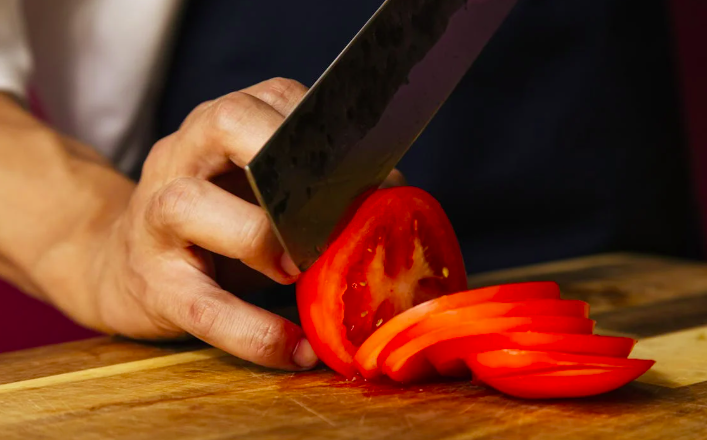 Acidic ingredients can build patina, but they should not be left on the blade.
For knives used daily, careful washing and drying may be enough. For knives stored for several days or longer, a very thin coat of food-safe mineral oil or camellia oil can help create a moisture barrier.
Use less oil than you think. The blade should not feel greasy. A thin, even film is sufficient.
Small rust spots can often be handled at home.
Avoid steel wool unless you are comfortable scratching the finish. For deep pitting, extensive rust, or rust near the edge, professional restoration is safer.
A carbon steel knife should not sit loose in a damp drawer. Use a magnetic strip, breathable blade guard, knife block with good airflow, or knife roll that is fully dry before storage.
Leather sheaths can trap moisture in humid climates. If you use one, make sure the knife is completely dry and do not store it long-term in leather.
Yes, for the right owner. Carbon steel is rewarding if you enjoy maintenance and want a very responsive edge. It may not be ideal if you want a knife that can be left wet, washed later, or stored casually.
If your household has multiple people using the same knife, make sure everyone understands the care routine. One person leaving a carbon steel knife wet overnight can undo months of good habits.
Carbon steel is not fragile, but it is honest. It shows you how it has been treated. Build a stable patina, keep moisture under control, and sharpen it properly, and it can become one of the best-performing knives in your kitchen.
For broader climate-specific care, read knife care in Singapore's humid climate.
P.s. If your carbon steel knife has rust spots, chips, or a tired edge, our knife sharpening service can inspect it and advise what can be restored.
We are currently only operating in Singapore. Our next pick up will be on .