2025-11-14
A sharp knife isn't just a tool - it's an extension of the chef's hand. But here's something fascinating: the way Japanese chefs sharpen their knives is fundamentally different from Western methods. These aren't just minor variations in technique; they represent entirely different philosophies about what makes a blade truly sharp.
If you've ever wondered why Japanese knives have such a legendary reputation for sharpness, or why sushi chefs spend years mastering the art of sharpening, you're in the right place. We're diving deep into the world of Japanese knife sharpening, comparing it with Western approaches, and helping you understand which method might be right for your kitchen.
Before we get into techniques, let's talk philosophy. Japanese knife sharpening is rooted in centuries of tradition, where blade maintenance is considered a meditative practice, not just a chore. Western sharpening, on the other hand, tends to prioritize efficiency and practicality.
Japanese Approach:
Western Approach:
Neither approach is "better"—they simply serve different needs and culinary traditions.
Toishi (砥石) is the Japanese word for whetstone, and using one properly is considered essential knowledge for any serious cook in Japan.
Traditional Japanese knives often feature a single-bevel edge, meaning only one side of the blade is sharpened to create the cutting edge. This design allows for incredibly precise cuts—think paper-thin sashimi slices or perfectly julienned vegetables.
Benefits of Single-Bevel:
Challenges:
Western knives typically use a double-bevel edge, where both sides are sharpened symmetrically. This makes them more versatile and easier to sharpen for beginners.
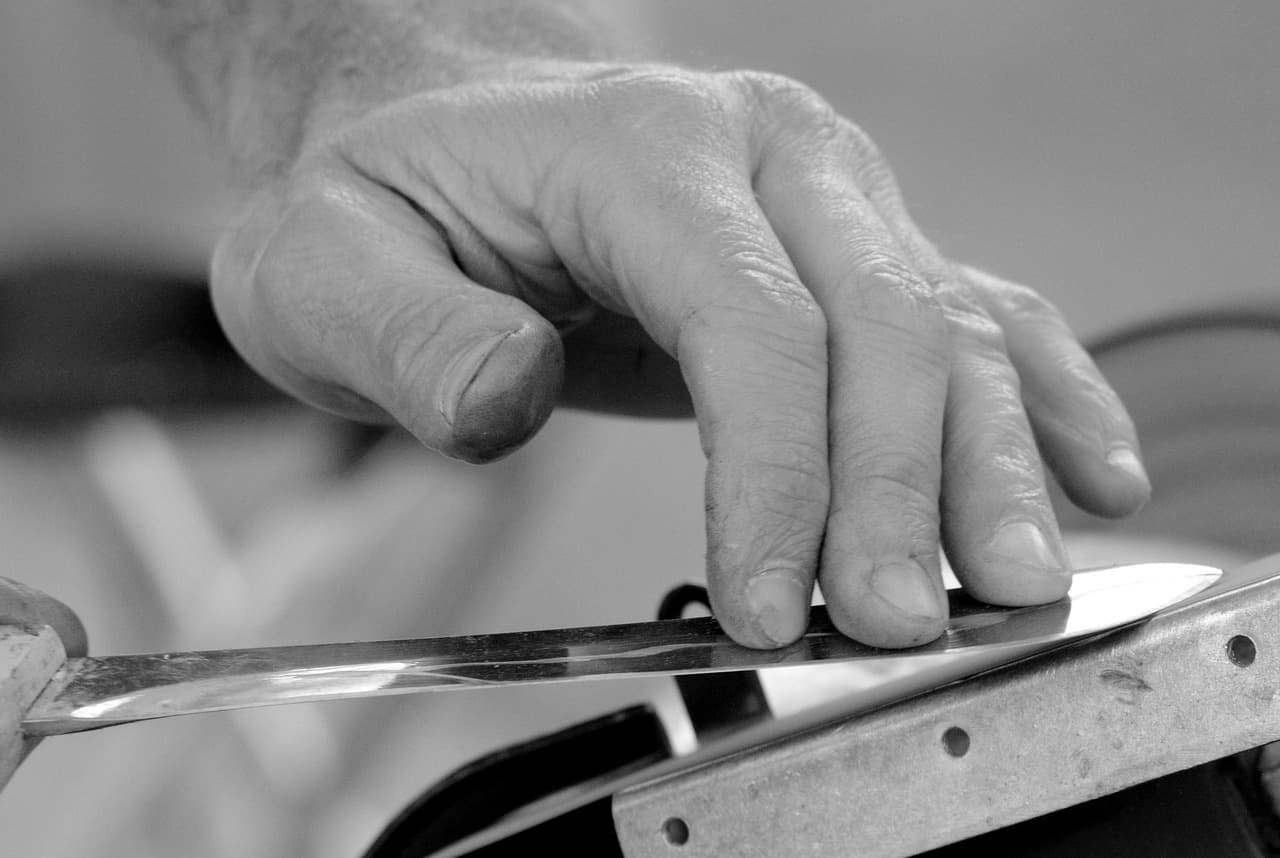
Japanese sharpening relies almost exclusively on water stones (whetstones). The process is methodical and requires practice:
Step 1: Stone Preparation
Step 2: Finding Your Angle
Step 3: The Sharpening Motion
Step 4: Progressive Grit Refinement
Step 5: Removing the Burr
In Japan, professional chefs sharpen their knives daily—not because the blade is dull, but to maintain peak performance. This preventive approach means they rarely need aggressive sharpening, which extends the knife's lifespan significantly.
Western sharpening methods have evolved to suit the faster pace of professional kitchens and home cooking.
One of the most iconic Western sharpening tools is the honing steel—that long metal rod you see chefs using with dramatic flair.
Important: Honing steels don't actually sharpen; they realign the edge. As you use a knife, the ultra-thin edge can bend microscopically. A honing steel straightens it back into place.
How to Use:
Western kitchens often employ powered or guided sharpening systems:
Belt Sharpeners:
Guided Sharpening Systems:
These are the most common household sharpeners in Western kitchens—compact, easy to use, and require no skill.
Pros:
Cons:
| Aspect | Japanese Method | Western Method |
|---|---|---|
| Primary Tool | Water stones (toishi) | Honing steels, belt sharpeners, various systems |
| Sharpening Angle | 10-15 degrees (sharper, more delicate) | 15-20 degrees (more durable, versatile) |
| Edge Type | Often single-bevel for traditional knives | Double-bevel for versatility |
| Frequency | Daily maintenance (light touch-ups) | Weekly honing, monthly sharpening |
| Philosophy | Meditative, precision-focused art | Practical, efficiency-focused skill |
| Time Investment | 15-30 minutes per session | 2-5 minutes with most tools |
| Learning Curve | Steep—takes months to master | Gentle—basic proficiency in days |
| Edge Quality | Razor-sharp, polished, mirror finish | Sharp and functional, less refined |
| Best For | Precision cutting, delicate proteins, sushi, sashimi | General cooking, meat prep, versatile kitchen tasks |
The answer depends on your needs, patience, and the type of knives you own.
Here's a secret: many professional chefs use both methods. They might sharpen their knives on Japanese water stones every few weeks, but use a Western honing steel for quick touch-ups between uses. This combines the precision of Japanese sharpening with the convenience of Western maintenance.
Using the Wrong Angle:
Trying to sharpen a Japanese knife at a Western angle (or vice versa) will ruin the edge geometry. Always know your knife's original angle.
Inconsistent Pressure:
Pressing harder on one side than the other creates an uneven edge. Practice maintaining steady, even pressure throughout each stroke.
Skipping Grit Levels:
Jumping from coarse to ultra-fine grit leaves scratches that prevent a truly sharp edge. Progress through grits sequentially.
Over-Sharpening:
Removing too much material shortens your knife's lifespan. Sharpen only when needed, and use the finest grit that will do the job.
Not Flattening Your Stones:
Water stones develop dips with use. Flatten them regularly with a flattening stone to maintain even contact.
Japanese and Western sharpening methods each have their place in the kitchen. Japanese techniques produce unmatched sharpness and precision, but require patience and practice. Western methods offer speed and convenience, perfect for busy home cooks.
Whichever path you choose, remember: a sharp knife is a safe knife. Dull blades require more force and are far more likely to slip and cause injury.
If you're in Singapore and want to experience the precision of professional sharpening without the learning curve, check out our knife sharpening service. We use traditional techniques to bring your blades back to peak performance.
Ready to master the art of the sharp edge? Pick up a stone, find your angle, and start your journey today.
We are currently only operating in Singapore. Our next pick up will be on 2026-10-10.