2026-04-17
Sharpness gets most of the attention, but geometry is what makes a knife feel effortless. A knife can have a sharp edge and still cut badly if the blade is too thick behind that edge. This is one of the most common reasons an older knife starts feeling stubborn even after sharpening.
In sharpening, "thin behind the edge" means the steel immediately above the cutting edge is slim enough to pass through food without wedging. It is not a marketing phrase. It is one of the clearest differences between a knife that merely has a sharp apex and a knife that actually cuts well.
When you look at a knife from the side, you see the profile. When you look at it from the spine down toward the edge, you see the geometry. That cross-section determines how the blade parts food.
A very thick blade can be sharpened to a fine edge, but the food still has to move around the steel behind the edge. If that shoulder is bulky, dense vegetables split, potatoes stick, and carrots crack loudly instead of slicing cleanly.
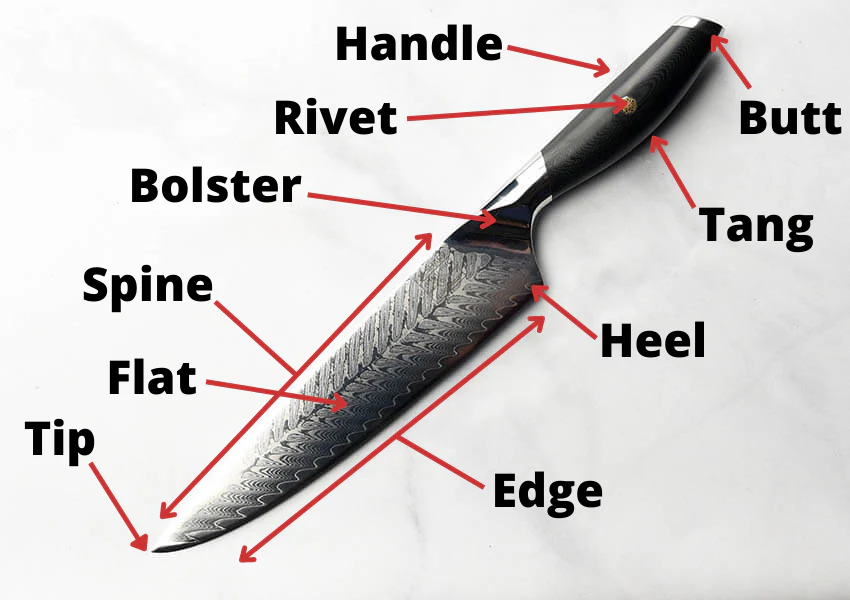 A knife's cutting feel depends on the whole blade geometry, not just the final millimetre of edge.
Every sharpening removes metal. As the edge moves upward into the blade, it reaches thicker steel. If the knife is only sharpened at the very edge for years, the blade can gradually become too thick behind the edge.
This is especially noticeable on knives that were once excellent. The owner says, "It is sharp, but it does not feel like it used to." Often, they are right. The edge may be sharp, but the geometry has changed.
Sharpening creates or refreshes the cutting edge. Thinning removes material from the blade face behind the edge so the knife can move through food more easily.
These are related, but they are not the same job. Sharpening is like putting a point back on a pencil. Thinning is like reshaping the pencil so the point is not sitting on a thick stump.
If these symptoms appear right after sharpening, the issue may not be sharpness. It may be geometry.
Thinness improves cutting performance, but it has limits. A very thin edge can chip if used on bone, frozen food, hard squash, or rough boards. A cleaver needs more support than a vegetable slicer. A German chef knife is built for different abuse than a delicate Japanese gyuto.
Good geometry is not simply "as thin as possible." It is thin enough for the job and strong enough for the user.
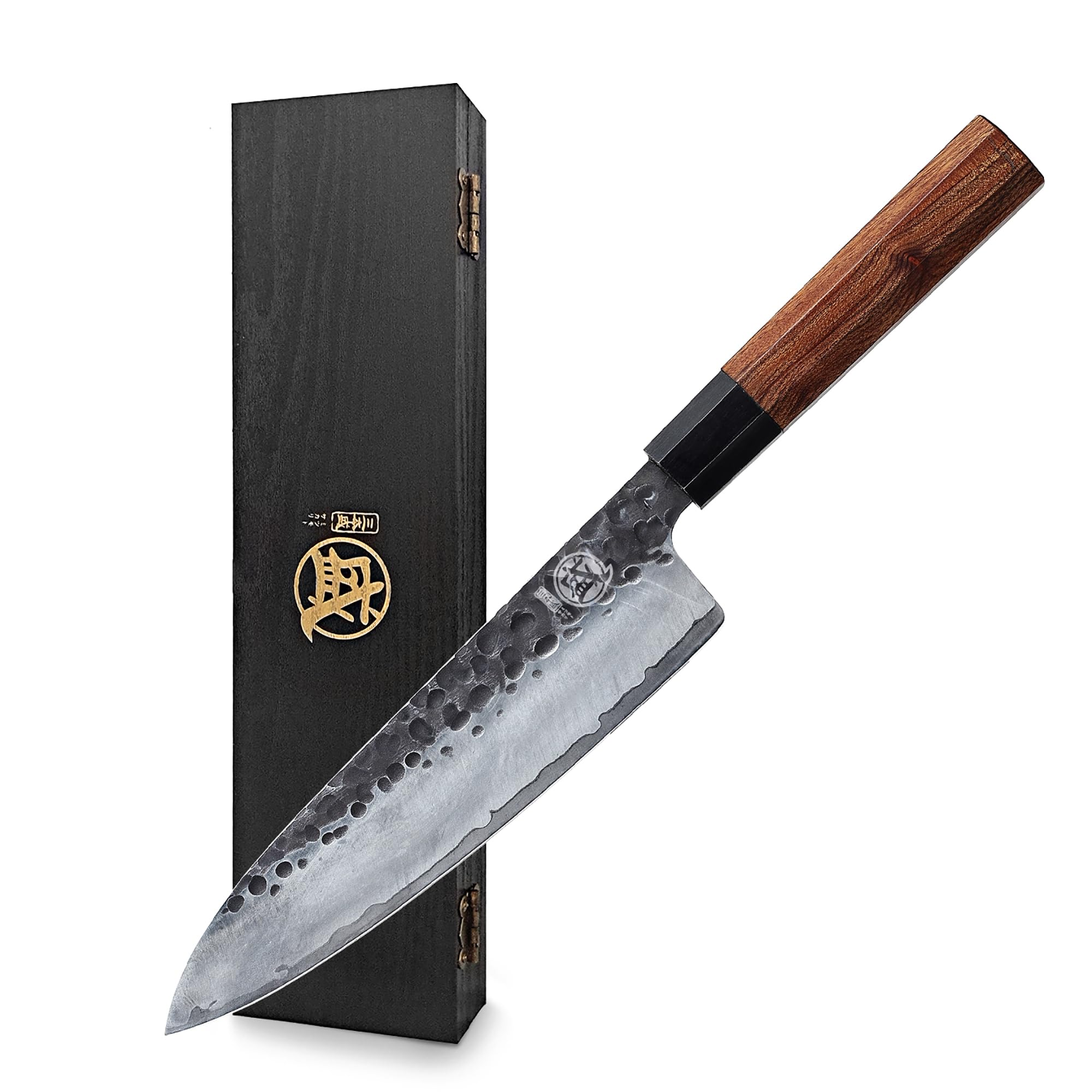 Many Japanese knives cut beautifully because they combine fine edges with efficient blade geometry.
Thinning is slower and more technical than routine sharpening. The sharpener has to remove steel evenly from the blade face, blend the work so the knife does not look or feel awkward, and then sharpen the final edge.
On some knives, thinning marks are visible unless the blade is refinished. On others, especially workhorse kitchen knives, performance matters more than a perfect cosmetic polish. A good sharpener should explain the trade-off before starting.
Yes, but it takes patience. Thinning on whetstones is possible, especially for people who already sharpen confidently. The challenge is maintaining even contact, avoiding deep scratches where you do not want them, and not changing the knife's profile accidentally.
For expensive knives, badly wedging knives, or blades with unusual geometry, professional help is usually sensible.
You cannot prevent steel from wearing forever, but you can slow the process.
Sharpness is what you feel at the edge. Geometry is what you feel through the whole cut. If your knife still seems sharp but no longer glides through food, the blade may need thinning rather than another quick edge refresh.
The best sharpening respects both. A clean apex makes the knife sharp. Good geometry makes it feel alive in the hand.
For more on this symptom, read why your knife feels sharp but doesn't cut well.
P.s. If your knife feels sharp but wedges through vegetables, our knife sharpening service can inspect whether it needs sharpening, thinning, or both.
We are currently only operating in Singapore. Our next pick up will be on .