2026-01-23
It is possible for a knife to feel sharp and still perform poorly. It may bite lightly into paper, yet crush tomatoes, split carrots, drag through onions, or leave herbs bruised and wet.
That happens because sharpness is only one part of cutting performance. A knife also depends on geometry, edge finish, steel condition, blade thickness, cutting board choice, and how well the edge was deburred after sharpening.
Sharpness describes the fineness of the cutting edge. Cutting ability describes how the whole blade moves through food. A knife can have a fine edge but still wedge badly if the blade is too thick behind that edge.
This is common in knives that have been sharpened many times without thinning. Each sharpening moves the edge slightly higher into thicker steel. Over time, the knife may still feel sharp at the apex but require more force to pass through dense ingredients.
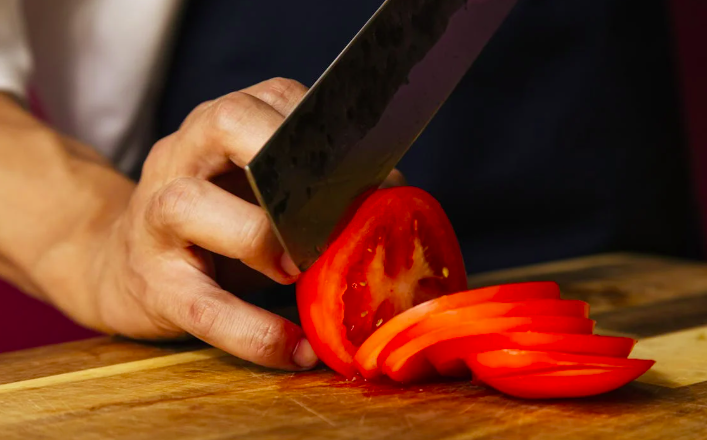 Tomatoes reveal both edge sharpness and whether the knife can start a cut cleanly.
If the shoulders behind the edge are too thick, the blade acts like a wedge. It may start the cut, then split the food apart instead of gliding through it.
The fix is usually thinning, not another quick sharpening. Thinning removes material behind the edge so the blade can move through food more efficiently.
During sharpening, a small fold of metal called a burr can form along the edge. If it is not removed properly, the knife may feel sharp briefly because the burr catches on paper or skin. Once you start cooking, that weak metal folds over or breaks away.
Good sharpening includes controlled burr removal. This step is one reason a professionally sharpened knife may last longer than a knife that was quickly pulled through a basic sharpener.
A highly polished edge can be excellent for some slicing tasks, but it may struggle to bite into tomato skin or pepper skin if it lacks microscopic tooth. A slightly toothy edge can initiate cuts more easily on fibrous or slick foods.
This does not mean polished edges are bad. It means the finish should match the knife's purpose. A sashimi knife, a chef knife, and a utility knife may benefit from different finishing choices.
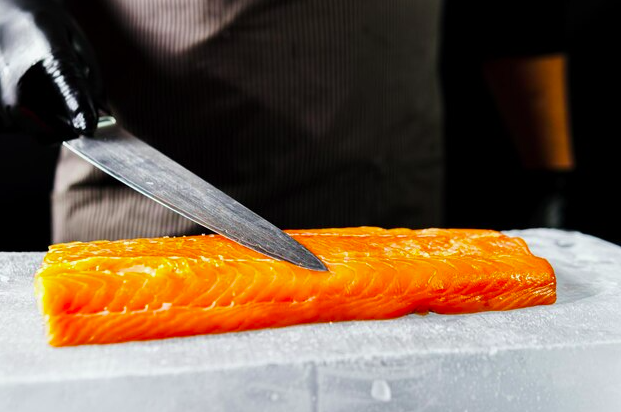 Protein slicing and vegetable prep can benefit from different edge finishes.
Edge angle affects both sharpness and durability. A very acute edge can feel impressive but may chip or roll if the steel is not hard enough or if the knife is used for heavy tasks. A very wide edge may last longer but feel blunt in daily prep.
The correct angle depends on the knife's steel, thickness, and intended use. Heavy cleavers, Western chef knives, thin santoku knives, and Japanese slicers should not all be sharpened the same way.
If a knife comes back sharp and loses performance quickly, the board may be the culprit. Glass, stone, ceramic, and marble are too hard for repeated cutting. They can roll or wear down the edge quickly.
Use wood or quality plastic. FoodSafety.gov also recommends replacing cutting boards when they become worn, because deep grooves are harder to clean and can hold moisture and food residue.
Small chips, a bent tip, rust pitting, or an uneven bevel can all affect cutting. A basic sharpening may improve the edge but leave the underlying issue in place.
If the knife catches in one specific section during a paper test, look closely at that part of the edge under bright light. Reflections, chips, or flat spots usually mean the edge needs repair.
Use food tests as well as paper tests:
Paper tells you about edge continuity. Food tells you about real cutting performance.
A knife that feels sharp but does not cut well may not be defective. It may need thinning, deburring, a different finish, a better edge angle, or a more suitable cutting board.
If you are unsure, ask for an inspection rather than another routine sharpening. The right diagnosis can save steel, improve performance, and make the knife more enjoyable to use.
For related troubleshooting, read why your knife dulls so quickly and how to fix it.
P.s. If your knife passes the paper test but still feels frustrating in the kitchen, our knife sharpening service can inspect it and recommend the right fix.
We are currently only operating in Singapore. Our next pick up will be on .