2026-06-12
You do not need a drawer full of sharpening gadgets to keep knives working well. In fact, too many tools can make knife care worse if they encourage rushed sharpening, aggressive pull-through habits, or inconsistent angles.
A good home maintenance kit should be simple. It should help you keep edges aligned, clean, dry, protected, and ready for professional sharpening when the knife truly needs it.
Home maintenance is not the same as full sharpening. The goal is to slow dulling, protect the edge, prevent rust, and make daily cooking safer.
For most home cooks, the kit should answer five questions:
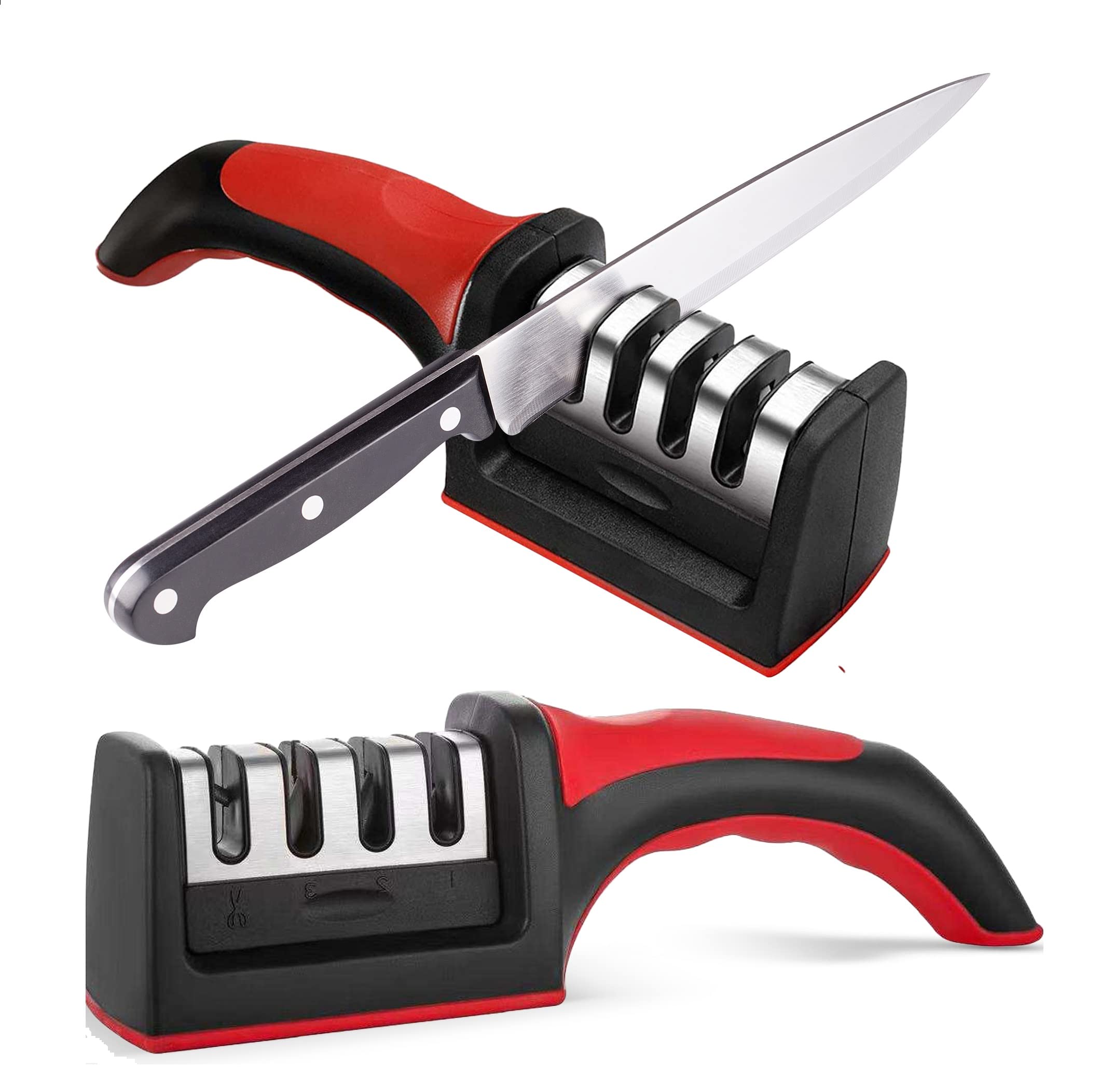 A useful maintenance kit should be small, deliberate, and easy to use correctly.
The cutting board is part of the maintenance kit because it touches the edge every time you cook. Wood and quality plastic are the practical choices. Avoid glass, stone, marble, and ceramic boards for cutting.
If your board is deeply grooved, cracked, or difficult to clean, replace it. A poor board can undo good sharpening faster than almost anything else in the kitchen.
A honing rod can be useful for many Western stainless knives because it realigns a slightly rolled edge. It is not a universal tool. Very hard or thin Japanese knives may not respond well to aggressive steeling, and ceramic knives should not be honed with a normal steel rod.
If you use a honing rod, use light pressure. The goal is alignment, not grinding.
For careful users, a fine ceramic rod or leather strop can refresh bite between sharpenings. These tools remove very little metal when used properly.
The risk is overuse. If you touch up constantly with poor angle control, you can round the edge or create inconsistent bevels. A few light passes are enough.
In Singapore, drying is maintenance. Keep a clean towel near the sink specifically for knives. Dry the blade, spine, heel, handle, and any rivets or joins where water can sit.
This matters even for stainless knives. Stainless means stain-resistant, not stain-proof.
If you own carbon steel knives, food-safe mineral oil or camellia oil is useful for storage. Apply a very thin layer when the knife will not be used for several days.
Do not use cooking oils. Many plant oils can become sticky or rancid over time.
Knife edges should not knock into other utensils. Use blade guards, a knife block, an in-drawer organiser, a magnetic strip, or a dry knife roll.
Loose drawer storage is one of the easiest ways to chip edges and cut fingers.
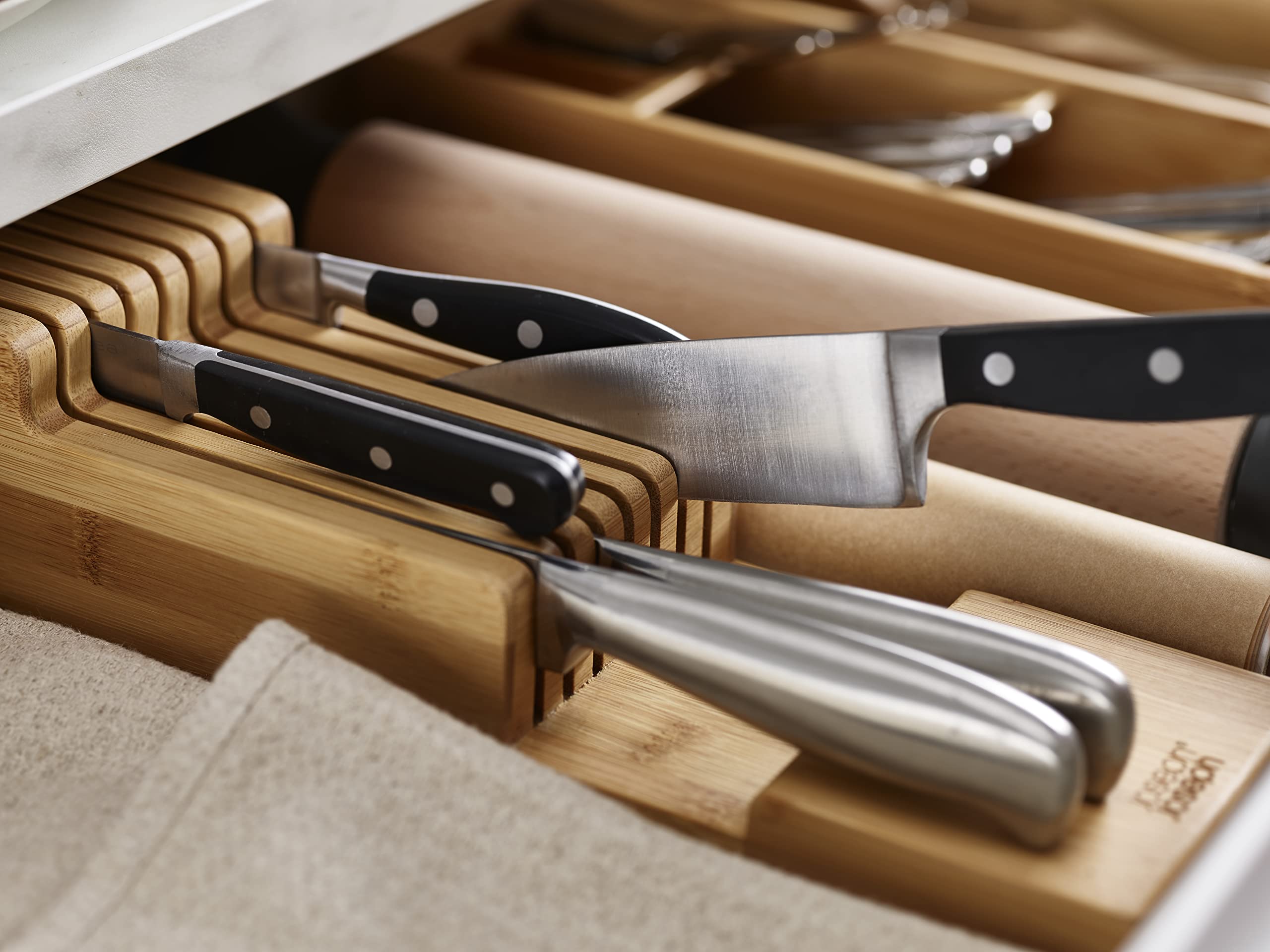 Good storage protects the edge when the knife is not in use.
Keep a sheet of paper or use a ripe tomato as a practical test. The point is not to obsess over sharpness. The point is to notice when the knife changes.
If the knife snags in one section, slips on tomato skin, or needs pressure to start a cut, it may be time for sharpening.
You probably do not need multiple cheap pull-through sharpeners, mystery abrasive gadgets, or coarse stones unless you plan to learn sharpening seriously. Coarse tools remove steel quickly. Used casually, they can shorten a knife's life.
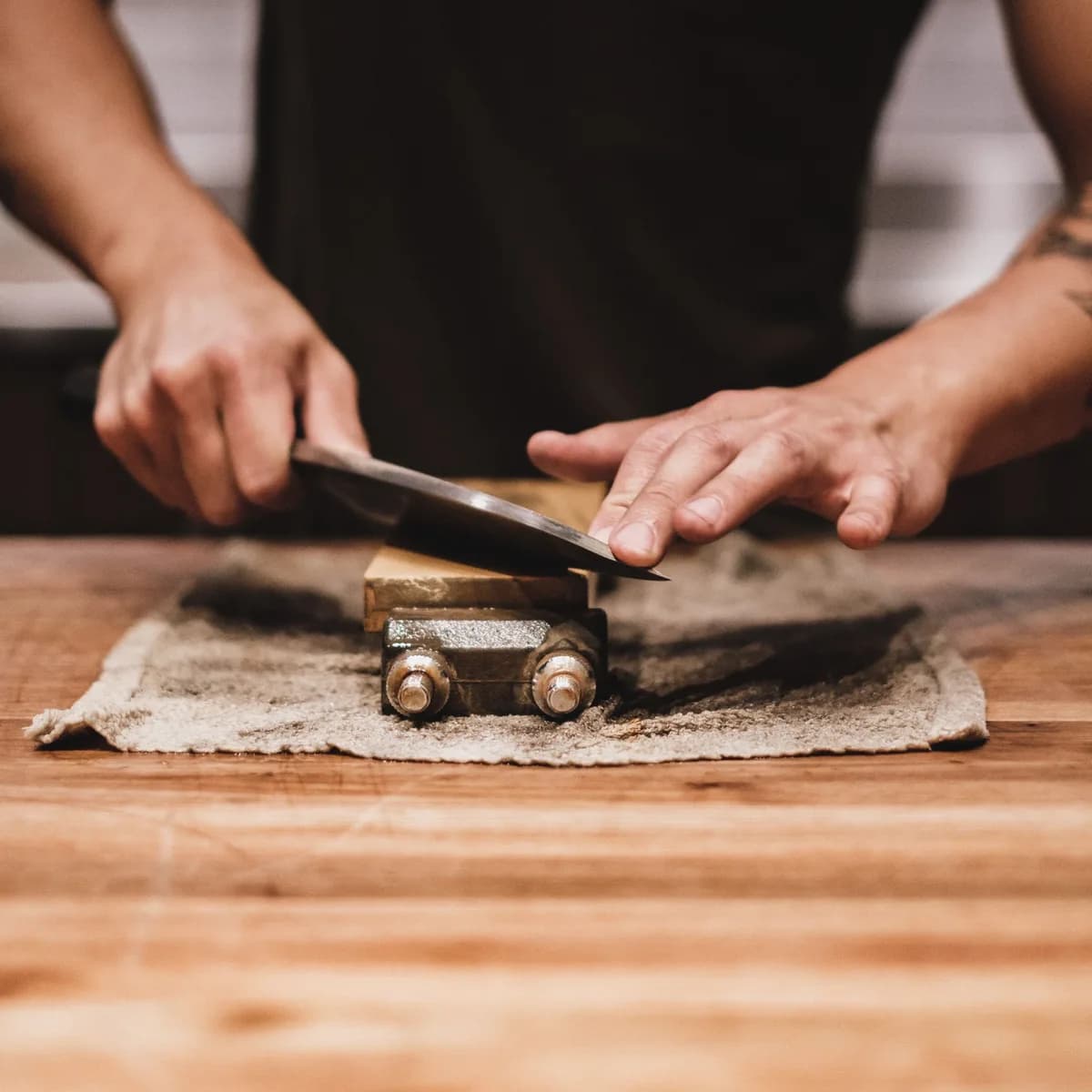
If you want to sharpen at home, invest in a proper stone and learn slowly. Otherwise, focus on maintenance and leave major edge work to a professional.
For a typical Singapore home kitchen, this is enough:
That small kit will do more than a pile of aggressive sharpening tools.
Knife maintenance is mostly restraint. Use the right board, dry the knife properly, store it safely, and touch up only when the knife benefits from it. When the edge is truly worn, chipped, thickened, or inconsistent, sharpening is the right next step.
For more on timing, read how often should you sharpen your knives?.
P.s. If your maintenance kit is doing its job but the knife still feels tired, our knife sharpening service can restore the edge properly.
We are currently only operating in Singapore. Our next pick up will be on .