2026-08-21
Online marketplaces have made it very easy to buy a "Japanese Damascus chef knife" for less than the price of a nice dinner. Some of these knives are great value. Many are not. Our sharpeners see both kinds every week.
The difficulty is that the listings look almost the same. Same dramatic photos, same five-star ratings, same claims about "VG-10" and "67 layers." Here's how to tell what you're actually buying before you check out.
True Damascus or layered steel is made by forge-welding layers of different steel together. It costs a lot to produce.
Many low-cost listings use a laser-etched or printed pattern on a plain steel blade. It looks the same in photos and wears off over time. That isn't necessarily a bad knife, but it isn't what the listing suggests.
Warning signs:
If you're paying for the pattern, make sure it's real. If you're paying for performance, the steel underneath matters more.
"High carbon stainless steel" can describe almost anything. A useful listing names the steel, for example:
Named steel is not a guarantee, but vague descriptions are a warning sign. Our guide to knife materials explains what these names mean in practice.
Hardness is measured on the Rockwell C scale (HRC). As a rough guide:
Very cheap knives claiming 62+ HRC deserve some scepticism. Hardness is achieved through careful heat treatment, which is one of the things budget makers tend to skip.
Five-star reviews are usually posted right after unboxing, when every knife is sharp. The useful information lives in the one- to three-star reviews, especially those written weeks later.
Look for repeated mentions of:
Repeated complaints about the same problem mean something.
Zoom into product photos where the blade meets the handle. Gaps, glue residue, or uneven finishing here often signal rushed manufacturing. In Singapore's humidity, gaps also trap moisture and can lead to rust or a loose handle.
A 15-piece block set for a low price usually means 15 mediocre knives. Most home cooks only need three: a chef knife, a paring knife, and a bread knife. Spending the same money on fewer, better knives is almost always the smarter choice.
See 5 must-have knives for every home cook for a practical starting kit.
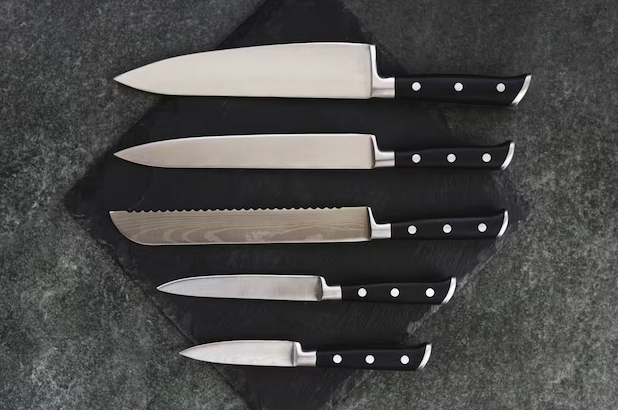 A handful of knives you will actually use beats a 15-piece block.
Here's something most listings won't tell you: many budget knives ship with a mediocre factory edge. It feels sharp on paper but has a thick, uneven bevel.
The good news is that a decent but inexpensive blade can often be improved a lot by proper sharpening. We covered this in can a cheap knife be sharpened to perform like an expensive one?.
 Check the knife against the listing as soon as it arrives.
Buying knives online isn't a bad idea. You just need to read the listing like a sceptic. Pay for good steel and a solid handle, not for patterns and piece counts. Then give the knife a proper edge, and an affordable knife can serve you well for years.
P.s. Bought a knife online and the edge isn't living up to the listing? Our knife sharpening service can give it a proper edge, with pickup and delivery across Singapore.
We are currently only operating in Singapore. Our next pick up will be on .