2026-07-10
Durian season is one of the best times of year in Singapore. It is also the time of year when good kitchen knives get chipped, bent, and twisted out of shape.
The reason is simple. When the durian comes home unopened, most people reach for whatever knife is closest. Often that is the nicest one in the drawer. A durian husk is thick, fibrous, and spiky, so a thin chef knife is the wrong tool for it, no matter how sharp it is.
Here is how to open durian at home without sacrificing your best blade.
A durian husk does not cut like fruit. It behaves more like wood wrapped in thorns. To open it, you usually need to:
Levering and twisting are exactly what fine kitchen knives are not designed for. A thin edge can handle huge downward force when it slices straight. Sideways force is another matter. That is how tips snap and edges chip.
Thin Japanese knives made from hard steel are especially at risk. Their hardness lets them hold a beautiful edge, but it also makes them less forgiving when bent.
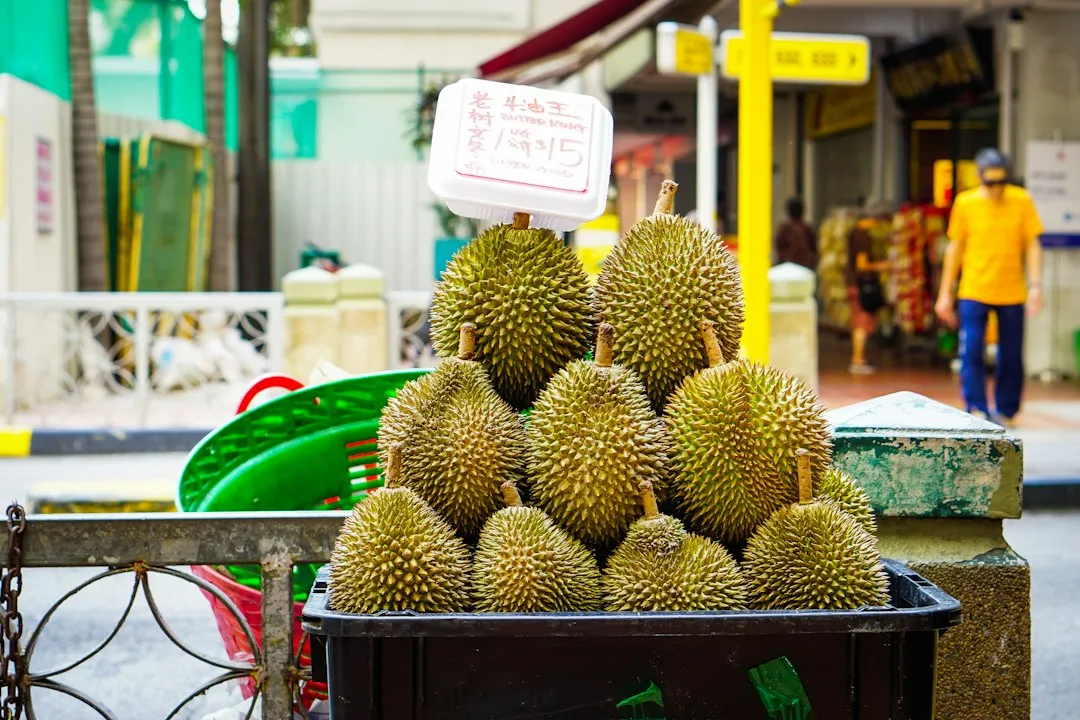 A durian husk is thick, fibrous, and spiky, and it behaves more like wood than fruit.
Keep these away from durian:
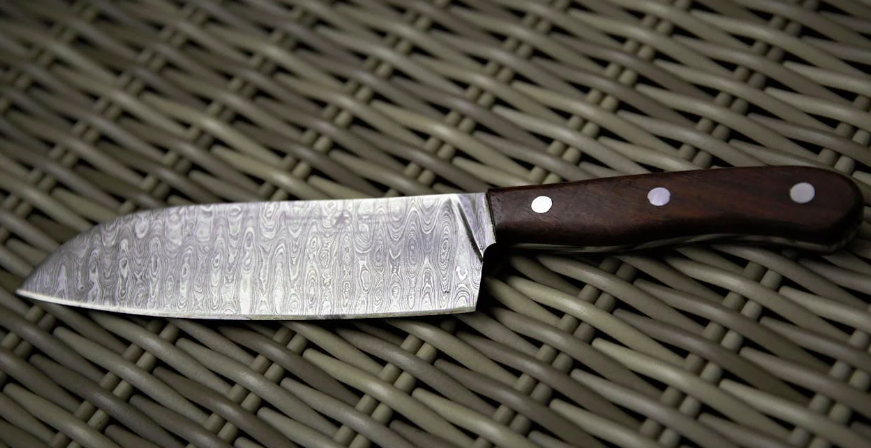 A thin, finely finished blade like this should stay well away from durian husks.
If you have already done this and noticed a chip, a missing tip, or an edge that catches on paper, the damage can often be fixed. Read how chip repairs work on knives to understand what is possible.
A durian opener or heavy, inexpensive knife. Many households keep a cheap, thick-spined knife just for durian, coconuts, and other rough jobs. Softer, tougher steel bends slightly instead of chipping, and if it gets damaged, you have not lost much.
A cleaver with a thick spine. A Chinese bone cleaver (not the thin vegetable cleaver) can handle more abuse. Use the heel area to start the cut, not the fine middle of the edge.
Thick gloves or a folded towel. This matters more than the knife choice. Durian thorns go straight through bare hands.
The knife should only start the opening. Your hands, protected by gloves or a towel, should do most of the prying.
Durian is sticky and smells strong. Clean the knife promptly:
In Singapore's humidity, a sticky knife left wet overnight can develop rust spots quickly. For more on this, see our guide to knife care in Singapore's humid climate.
After durian season, look over any knife that was used on a husk:
Most of these can be fixed with professional sharpening and repair. A broken tip can usually be reshaped. The sooner a chip is dealt with, the less steel needs to come off later.
Durian is worth the effort, but your best knife does not have to pay for it. Keep a cheap, sturdy knife for rough jobs, wear gloves, and let your hands do most of the prying.
If your chef knife has already lost a battle with a durian, you can still fix it.
P.s. Chipped a knife this durian season? Our knife sharpening service handles chip repairs and broken tips, with pickup and delivery across Singapore.