2026-10-02
A good knife is one of the most useful gifts you can give someone who cooks. It is used every day, can last for decades, and gets better with care.
But if you've ever mentioned this idea to a parent or grandparent in Singapore, you may have received a worried look. In many cultures, giving a knife is considered bad luck.
With the festive season approaching, here is what the superstition actually says, how people traditionally work around it, and how to choose a knife someone will love.
The belief shows up in many cultures, including Chinese, Japanese, and several European traditions. The idea is that a blade "cuts" the bond between giver and receiver. Giving a knife might sever the friendship or relationship.
In Chinese culture, sharp objects are sometimes also associated with conflict, which adds to the reluctance to give them during celebrations.
Not everyone takes it seriously, of course. But if the recipient, or their family, does, it's worth respecting.
The traditional workaround is simple and charming: the recipient gives the giver a small coin in return.
This turns the gift into a "purchase." The knife has technically been bought, not given, so the bond isn't cut. Some givers tape a coin to the box so the recipient can hand it straight back.
It is a small gesture, but it shows thoughtfulness and makes the gift easy to accept.
When in doubt, ask yourself whether they cook at least a few times a week. If they do, a good knife will be appreciated.
Start with one great knife, not a set. A single quality chef knife or santoku is more useful than a block of mediocre knives.
Chef knife or santoku? A chef knife suits people who rock-chop and cook a wide variety of food. A santoku suits those who prefer push-cutting and shorter blades, and it fits comfortably in smaller kitchens. Our chef knife vs santoku comparison explains the difference.
Consider the recipient's habits.
Size matters. An 18 to 21 cm blade suits most home cooks. Longer knives can feel unwieldy in compact HDB kitchens.
A knife gift goes further with a few practical extras:
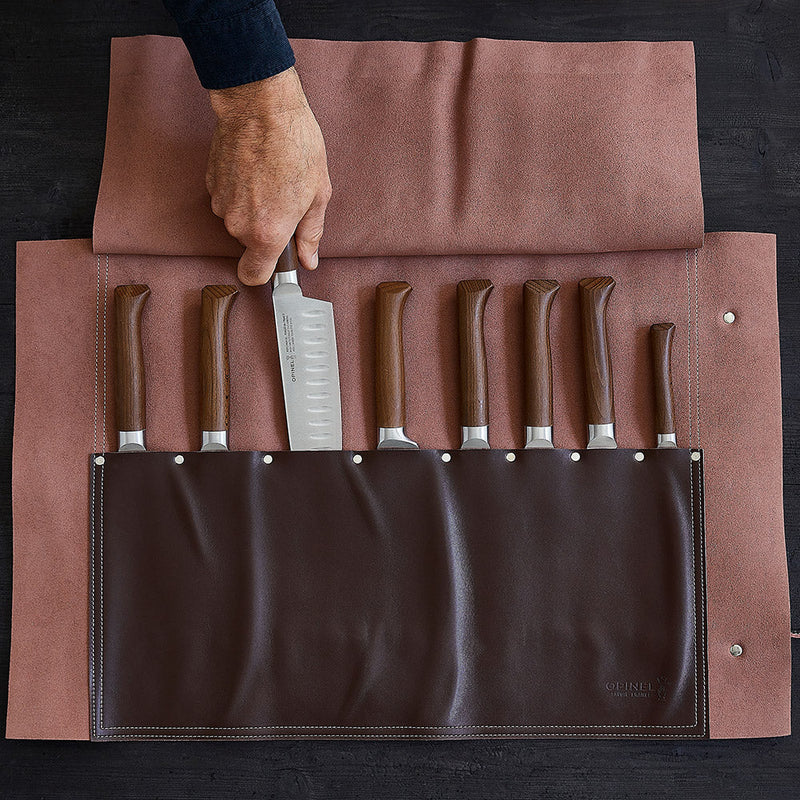 A knife roll or sheath protects the edge and makes the gift feel complete.
You can point them to our guide on avoiding common knife care mistakes so they get started on the right foot.
Here's an idea that avoids the superstition entirely. Many people already own decent knives that have simply gone dull. A professional sharpening can make an old knife feel brand new, and no new blade changes hands.
This works especially well for parents and grandparents who are attached to their old knives and wouldn't want to replace them anyway.
Giving a knife can be a thoughtful, lasting gift, as long as you respect the superstition when it matters. Include a coin, choose a knife that suits how they cook, and add a few care basics.
Or skip the new knife entirely and give their old favourite a second life.
P.s. Want to give the gift of sharp knives this festive season? Our knife sharpening service picks up and delivers across Singapore, so it's easy to arrange for family.